
Last updated on
Nov 15, 2026

FSAFEDS 4120-FEDS 2021-2026 free printable template
pdfFiller is not affiliated with any government organization

Fill out
Complete the form online in a simple drag-and-drop editor.

eSign
Add your legally binding signature or send the form for signing.

Share
Share the form via a link, letting anyone fill it out from any device.

Export
Download, print, email, or move the form to your cloud storage.
Why pdfFiller is the best tool for your documents and forms


End-to-end document management
From editing and signing to collaboration and tracking, pdfFiller has everything you need to get your documents done quickly and efficiently.
Accessible from anywhere
pdfFiller is fully cloud-based. This means you can edit, sign, and share documents from anywhere using your computer, smartphone, or tablet.
Secure and compliant
pdfFiller lets you securely manage documents following global laws like ESIGN, CCPA, and GDPR. It's also HIPAA and SOC 2 compliant.
What is FSAFEDS 4120-FEDS
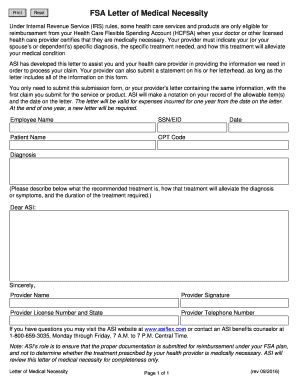
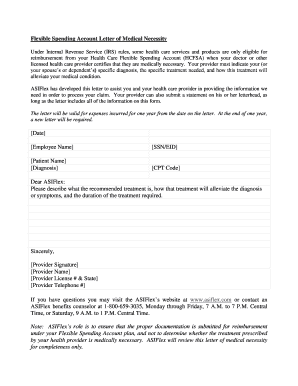
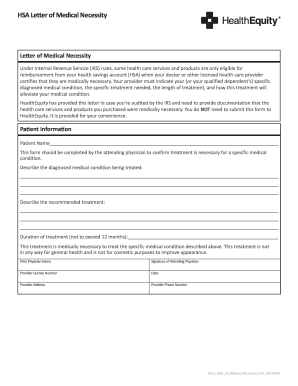
The FSA Letter of Medical Necessity is a medical consent form used by participants to certify that a medical service or product is necessary for reimbursement under a Health Care FSA.
pdfFiller scores top ratings on review platforms




Who needs FSAFEDS 4120-FEDS?
Explore how professionals across industries use pdfFiller.

FSAFEDS 4120-FEDS is needed by:
-
Participants in a Health Care FSA
-
Licensed practitioners who need to certify medical necessity
-
Health plan administrators reviewing claims
-
Families seeking reimbursement for eligible medical expenses
-
Employers managing Health Care FSA plans
Comprehensive Guide to FSAFEDS 4120-FEDS
What is the FSA Letter of Medical Necessity?
The FSA Letter of Medical Necessity is a crucial document that certifies the medical necessity of a service or product, primarily used in the context of Health Care Flexible Spending Accounts (FSAs). This letter plays a vital role in helping participants seek reimbursement for eligible medical expenses. It must be completed by licensed practitioners who understand the specific medical requirements of the patient, ensuring that the services or products claimed meet necessary health standards.
The form verifies the connection between the recommended service and the patient's medical condition, making it an essential tool for reimbursement claims in the healthcare system.
Purpose and Benefits of the FSA Letter of Medical Necessity
The FSA Letter of Medical Necessity is important for participants aiming to secure reimbursements for medical expenses. This document is necessary under specific conditions, such as when an item or service is not typically covered by standard FSA plans.
-
Facilitates quicker processing of reimbursement claims.
-
Provides healthcare providers a formal means to communicate medical necessity.
-
Enables patients to access funds for essential medical services and products.
Key Features of the FSA Letter of Medical Necessity
Understanding the key features of the FSA Letter of Medical Necessity is essential for both patients and practitioners. The form includes multiple fillable fields and checkboxes, making it user-friendly. It's designed with clear instructions to assist participants in accurately providing the necessary information.
Moreover, the completion of this form requires signatures from licensed practitioners, emphasizing the importance of professional validation in the submission process.
Who Needs the FSA Letter of Medical Necessity?
The primary users of the FSA Letter of Medical Necessity include participants with Health Care FSAs and their eligible dependents. These individuals must ensure that a licensed practitioner completes and signs the form to validate the medical necessity of the claimed service or product.
Licensed practitioners play a crucial role by accurately assessing the medical need and confirming it through their signature, which is mandatory for the form's acceptance.
How to Fill Out the FSA Letter of Medical Necessity Online
Completing the FSA Letter of Medical Necessity online is straightforward when following these step-by-step instructions. Start by accessing the form through an online PDF editor, such as pdfFiller, where you can fill in the required information directly.
-
Enter the patient's details in the designated fields.
-
Select applicable checkboxes that correspond to the medical services or products needed.
-
Ensure the licensed practitioner provides their signature for validation.
Be mindful of common errors, such as missing signatures or incomplete fields, as these can lead to delays in acceptance.
Submission and Filing of the FSA Letter of Medical Necessity
Once the FSA Letter of Medical Necessity is completed, participants must prepare it for submission. This process includes gathering necessary documentation, such as receipts and Explanation of Benefits (EOB) that confirm the medical expenses incurred.
-
Submit the completed form along with supporting documents.
-
Ensure you are aware of the submission methods available, such as electronic and paper formats.
-
Be mindful of deadlines for submission to avoid losing reimbursement opportunities.
What Happens After You Submit the FSA Letter of Medical Necessity?
After submitting the FSA Letter of Medical Necessity, participants can expect a follow-up process regarding their claims. This typically involves a processing period during which the claim is reviewed by the FSA administrator.
Tracking claims status is essential, and participants should remain proactive in checking for updates. Familiarize yourself with common rejection reasons to address potential issues swiftly, ensuring a smoother reimbursement process.
Security and Compliance for the FSA Letter of Medical Necessity
The security of sensitive information is paramount when handling the FSA Letter of Medical Necessity. pdfFiller implements robust security measures, including 256-bit encryption, to protect user data and ensure compliance with regulations such as HIPAA.
Maintaining the privacy of medical documents is critical, and users can feel confident knowing their information is handled securely throughout the process.
Leveraging pdfFiller for Your FSA Letter of Medical Necessity
Using pdfFiller can significantly enhance your experience while completing the FSA Letter of Medical Necessity. This platform offers a wide range of capabilities that simplify the form-filling process, including editing, eSigning, and document sharing.
The convenience of utilizing pdfFiller allows users to efficiently manage their documentation, ensuring that the FSA Letter of Medical Necessity is completed accurately and submitted in a timely manner.
How to fill out the FSAFEDS 4120-FEDS
-
1.Access pdfFiller and search for the 'FSA Letter of Medical Necessity' form in the template library.
-
2.Open the form in the pdfFiller interface, ensuring you have a stable internet connection.
-
3.Gather necessary information including details about services or products received and your Health Care FSA plan information.
-
4.Begin filling in the participant's information in the designated fields; ensure accuracy for prompt processing.
-
5.Navigate to the licensed practitioner's section and enter their details; make sure they have access to review prior to completion.
-
6.Utilize the checkboxes to indicate the specific medical services or products that are necessary, as per your healthcare requirements.
-
7.After completing all fields, carefully review the form for any errors or missing information before finalization.
-
8.Once satisfied with the entries, save your work on pdfFiller by clicking the save button on the top toolbar.
-
9.You can then download the completed form to your device or submit it directly through pdfFiller if your provider accepts electronic submissions.

Who needs to complete the FSA Letter of Medical Necessity?
The FSA Letter of Medical Necessity must be completed by a licensed practitioner, such as a physician, on behalf of the participant requiring reimbursement for eligible medical expenses.
What supporting documents are needed for submission?
Along with the FSA Letter of Medical Necessity, participants should submit a Health Care FSA claim form and a detailed receipt or Explanation of Benefits (EOB) to ensure proper reimbursement.
Can anyone claim expenses without this form?
No, the FSA Letter of Medical Necessity is crucial for certifying that the expense is medically necessary. Claims without this form may be denied by the Health Care FSA administrator.
Are there deadlines for submitting the form?
Yes, it is important to check your specific FSA plan for submission deadlines. Generally, forms should be submitted within the plan year for reimbursements to be processed.
What are common mistakes to avoid when filling out the form?
Common mistakes include incomplete fields, inaccurate practitioner information, and failing to provide supporting documents like receipts or EOBs. Ensure accuracy to avoid processing delays.
What is the processing time for claims submitted with this form?
Processing times vary based on the FSA plan but typically take 7-14 business days. Ensure all documents are submitted correctly to avoid delays.
Is notarization required for the FSA Letter of Medical Necessity?
No, notarization is not required for this form. It must be signed by a licensed practitioner to validate the medical necessity.
FSAFEDS 4120-FEDS Form Versions
Related Content
Related Forms




Get the latest insights from our blog


If you believe that this page should be taken down, please follow our DMCA take down process
here
.
This form may include fields for payment information. Data entered in these fields is not covered by PCI DSS compliance.